Seeds Radish "French Breakfast"


- Model: 20251
- Weight: 0.10kg

Telephone: 0884 741 315, 02 945 28 92
Follow us: 

"French Breakfast" Radish
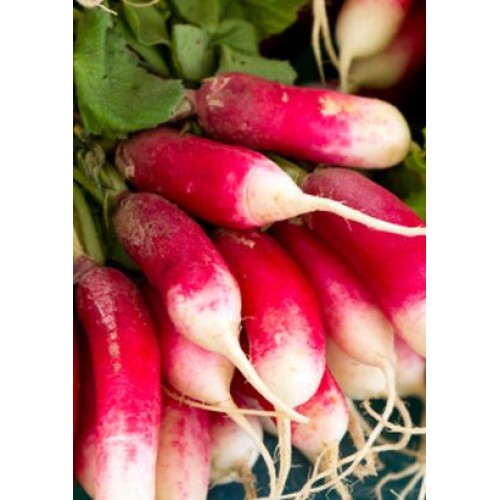
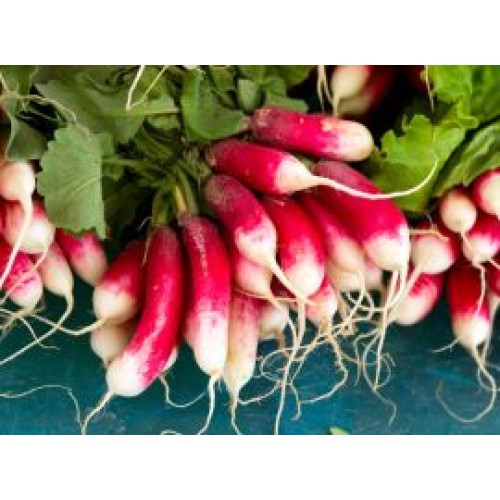
The "French Breakfast" radish variety is highly attractive and easily recognizable by its elongated, slightly cylindrical shape. The roots are pinkish-red with a distinctive white tip. The later they are harvested, the larger the white section becomes, and the more pronounced the spiciness can be.
"French Breakfast" grows quickly and has a pleasant, slightly piquant flavor. It is suitable for eating fresh, as well as for use in salads, sandwiches, and as a crunchy garnish.
Ideal for the garden, balcony, and pots
Radishes are a vegetable that requires little space and is suitable for growing in the garden as well as in:
- pots and containers;
- window boxes;
- raised beds;
- greenhouses or sheltered areas.
- This fast-growing variety allows for an early harvest, making it an excellent choice for home gardening.
Cultivation
Radishes prefer bright to sunny locations and loose, well-drained, nutrient-rich soil.
Consistent watering is essential; a lack of water or irregular watering can cause the radishes to become tough and woody.
Seeds are sown at a depth of approximately 1 cm. Under favorable conditions, they germinate in about a week. The first harvest is often ready in just four weeks.
For summer or autumn sowings, the crop typically takes about 7–8 weeks to mature. Leave sufficient space between plants to allow the root vegetables to develop properly. Radishes can be grown indoors or in a greenhouse, though those grown outdoors usually develop a richer flavor.
Harvesting and storage
Radishes are tastiest when freshly picked and crisp. It is advisable to remove the leafy tops before storage. They can be kept in the refrigerator for a short time—ideally wrapped in a damp cloth.
If radishes have become slightly soft or shriveled, soaking them briefly in water can help restore some of their freshness and crispness.
Useful information
Radishes belong to the cruciferous family, just like turnips and cabbage. Their characteristic, slightly pungent taste comes from naturally occurring mustard oils.
They contain water, vitamins, and various minerals, making them a suitable addition to a varied and balanced diet.
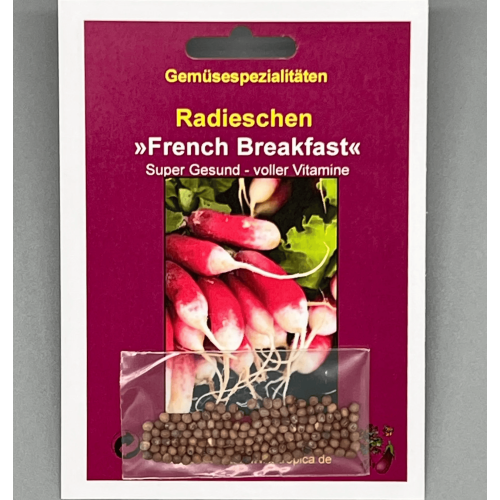
40 seeds