
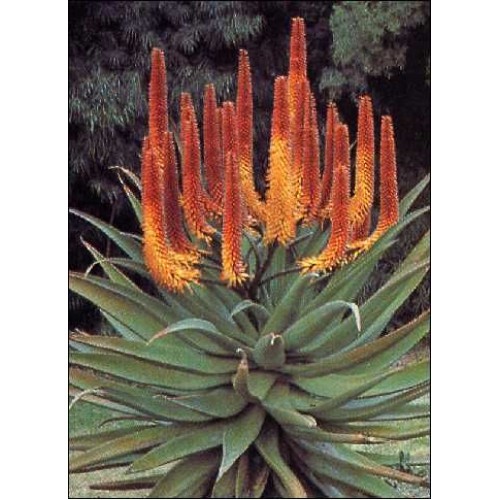
Fire - Aloe (Aloe ferox)


- Model: 19418
- Weight: 0.10kg
- SKU: 19418

Telephone: 0884 741 315, 02 945 28 92
Follow us: 

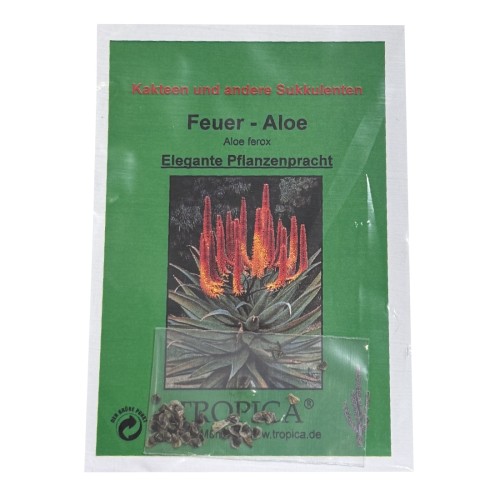
Seeds: 20 pcs.
Interesting facts: The fire aloe is a succulent rosette plant. It even forms a trunk. The lance-shaped, sword-like leaves grow in a dense rosette. The edges are serrated. The plant produces many orange-red flowers.
Origin: South Africa.
Cultivation: Sowing seeds indoors is possible year-round. Mix finely ground potting soil thoroughly with approximately 25% fine sand (quartz sand is even better). The soil should not be too coarse to prevent the seeds from falling through. Moisten the mixture with a water sprayer and scatter the fine seeds on top. All cacti are light-dependent germinators and should therefore not be covered. Sufficient warmth (16° to 25°C) and high humidity are crucial. To achieve this, each seed tray should be covered with plastic wrap or a glass pane and ventilated for two hours every two to three days.
Location: The aloe is very adaptable and even grows in very shady spots. For optimal growth, plenty of light and sun are essential. In summer, it thrives in a sheltered spot outdoors. The plant grows best when left untouched – pruning is unnecessary.
Care: Water only when the soil has dried out. Young plants should generally be kept slightly moister. Rainwater or softened water is ideal. Empty any excess water to prevent waterlogging and root rot. Tip: In warm locations, mist the plant every two weeks from above with a spray bottle.
Fertilizing: From March to September, feed the plant every three weeks with liquid fertilizer for container plants or cacti. Overwintering: Aloe can survive the winter quite well even in dark locations. However, the temperature should not exceed 10°C (50°F). The brighter the location, the more warmth is required.


