
Tomatillo "Purple", Ground Cherry (Physalis ixocarpa)


- Model: 13820
- Weight: 0.10kg
- SKU: 13820

Telephone: 0884 741 315, 02 945 28 92
Follow us: 

Seeds: 20 pcs.
Interesting Facts: Many foreign and exotic vegetables found their way to Europe very late. At best, they existed as ornamental plants or as oddities in botanical gardens. From the 17th century onward, the first vegetables from around the world, such as tomatoes and eggplants, arrived in Southern Europe. Even today, vegetable consumption in their countries of origin is twice as high as in Europe. In the 18th century, peppers from Hungary and chili peppers from India joined the ranks. Cultivation was made more difficult by the fact that many vegetables prefer warm climates. Today, almost every vegetable is praised by doctors and scientists for its nutritional value. Since travel has become quick and easy for everyone, enjoying foreign cuisines with unusual and exotic vegetables has become increasingly commonplace. The new and modern generation of cooks also loves to experiment, and fortunately, we are increasingly discovering delicious and vitamin-rich vegetables from around the world that we may not have even known existed a while ago.
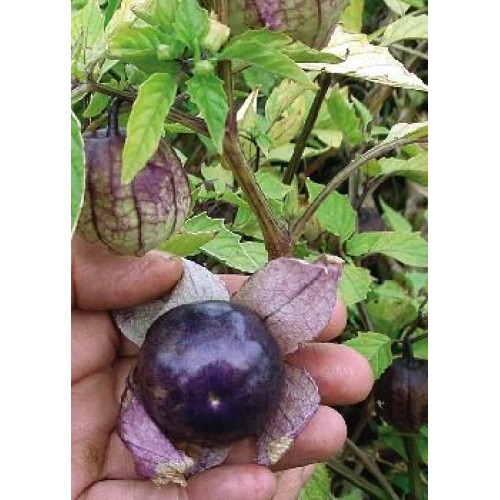
Origin: The tomatillo, also known as Mexican ground cherry, has been cultivated and valued in South America for millennia. The plant grows to about 1.5 meters tall and is related to the Cape gooseberry. The broad, rounded fruits, which can reach up to 6.5 cm in size, remain enclosed in light green, papery husks until ripe. The berries are dark purple and take about 65 to 80 days to ripen. In Mexico and Guatemala, the flavorful, vitamin C-rich ground cherry is cooked or steamed and eaten as a vegetable. The fruits are also delicious raw, in salads, or as jam. Here, the purple fruits are difficult to find and very expensive.
Cultivation: The seeds of the Mexican ground cherry can be scattered on moist soil, then thinly covered and kept evenly moist. The first seedlings will appear after 14 to 20 days. Germination is faster in warmer or higher temperatures. The location should be sunny and sheltered from the wind. Nutrient-rich soil is recommended as a substrate. Frequent watering and fertilizing every two weeks will promote a bountiful harvest. These frost-sensitive plants do not tolerate cold and are therefore best considered a summer fruit. Do not place pots or containers outdoors before mid-May. Year-round cultivation is possible in a conservatory or greenhouse.
The Mexican ground cherry belongs to the nightshade family. Unripe fruits are poisonous.


