
Seeds Beefsteak plant (Perilla frutescens)
-500x500h.jpg "Seeds Beefsteak plant (Perilla frutescens)")


-80x80h.jpg "Seeds Beefsteak plant (Perilla frutescens)")

- Model: 20270
- Weight: 0.10kg

Telephone: 0884 741 315, 02 945 28 92
Follow us: 

Perilla – An Asian medicinal and culinary herb
Useful information:
This versatile annual culinary herb from the Lamiaceae family is a staple of Asian cuisine. Its leaves are edible. The plant reaches a height of 30–80 cm and can be grown in pots or containers as well as in the garden.
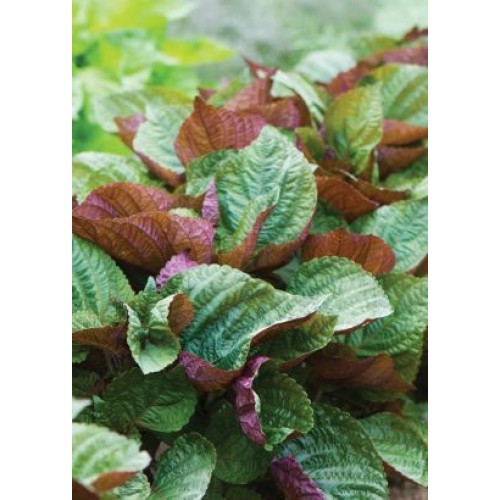
The plant has a bushy growth habit and reaches a diameter of about 25–30 cm. It produces delicately fragrant pinkish-white flowers. There are three main varieties of perilla: green-leaved, red-leaved, and the truly impressive 'Britton' variety. The latter features leaves that are green and rough-textured on the upper side, while the underside is red. The plant is also easily recognized by its square-shaped (four-angled) leaf stalks.
Leaf harvesting can usually begin after 80–85 days. Leaves can be picked as needed. Harvesting only the stem tips encourages the plant to branch out and become even bushier.
Origin:
Perilla is native to Southeast Asia.
Cultivation:
Sowing can begin indoors in February at a temperature of around 20°C, or directly outdoors from May onwards. The seeds require light to germinate, so they should be covered with only a very thin layer of soil. Germination typically takes 10–30 days.
For optimal growth, a spacing of about 25 cm should be maintained between individual plants.
Culinary use:
Traditionally, the leaves are used with sushi and sashimi. The larger leaves are suitable for salads and for garnishing dishes.
When pickled in Ume Su, the leaves make a delicious and aromatic accompaniment to tofu, fish, or vegetable dishes. Perilla is widely used in macrobiotic cuisine.
In Asia, a tea is prepared from the leaves; it is traditionally believed to have anti-inflammatory, antispasmodic, and expectorant effects when treating colds.
Location and soil:
Perilla prefers warm, sunny to semi-shaded locations and nutrient-rich soil. It grows even in relatively clay-heavy soils. The soil should be kept slightly moist.
Overwintering:
The plants die back in winter but usually self-seed, so young plants reappear the following spring.
Resilience:
*Perilla frutescens* is highly resistant to pests and plant diseases.
100 seeds


